
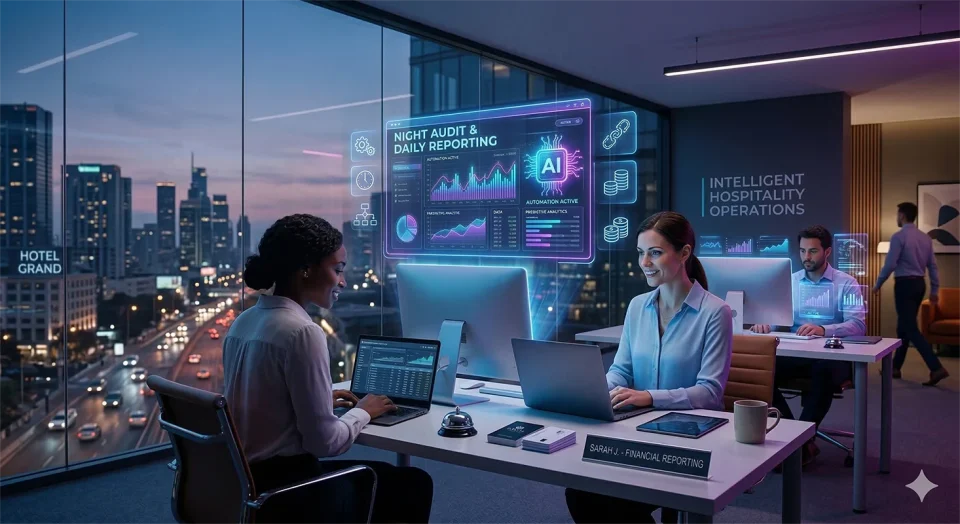
Hotel automation refers to the use of technology to perform routine hotel tasks with minimal human involvement-forming the foundation of hospitality workflow automation. It helps hotels manage operations such as guest check-ins, housekeeping schedules, inventory management, and guest communication automatically. By using automation, hotels can improve efficiency, reduce manual work, and provide better service to guests. Staff members can focus more on customer interaction instead of spending time on repetitive tasks.
Automation is changing the hospitality industry by improving daily hotel operations. One example is automated check-in systems. Guests can check in through self-service kiosks or digital platforms instead of waiting at the reception desk. Some hotels also offer mobile room access, allowing guests to unlock their rooms using their smartphones. This reduces waiting time and makes the arrival process faster and more convenient.
Housekeeping management is another area where automation plays an important role. Automated systems can schedule cleaning tasks, monitor room status, and notify housekeeping staff when rooms become vacant. Real-time updates allow staff to adjust their schedules according to occupancy levels. This ensures that rooms are cleaned on time and ready for new guests without delays.
Automation also helps hotels manage pricing and revenue more effectively. Automated revenue management systems analyse data such as demand, occupancy levels, and market conditions. Based on this information, the system can automatically adjust room prices to maximise revenue. This process, often called dynamic pricing, helps hotels remain competitive in the market.
Another important benefit of automation is improved guest communication. Automated messaging systems can send booking confirmations, welcome messages, reminders, and promotional offers to guests through email or text messages. This allows hotels to maintain continuous communication with guests while reducing the workload on staff.
Automation also supports hotel management by providing useful data and insights. Automated systems collect information about guest preferences, booking patterns, and occupancy trends. Managers can use this data to make better decisions about pricing, marketing strategies, and service improvements. Data-driven decision-making helps hotels improve performance and increase profitability.
Before implementing automation, hotels should first identify the areas that require improvement. Managers need to analyse current operations and determine where automation can increase efficiency. Common starting points include front desk services, booking management, housekeeping coordination, and revenue management.
Choosing the right technology is also important for successful automation. Hotels should select systems that match their size, budget, and long-term goals. It is also necessary to ensure that the new technology can integrate smoothly with existing hotel management systems.
Training employees is another key factor when introducing automation. Staff members must understand how to use the technology properly so they can manage operations efficiently and assist guests when needed. Regular training ensures that both staff and systems work together effectively.
In conclusion, hotel automation is becoming an essential part of modern hospitality management. It improves operational efficiency, enhances guest satisfaction, and helps hotels make better business decisions. By adopting automation carefully and training employees properly, hotels can operate more efficiently and stay competitive in the evolving hospitality industry.
