
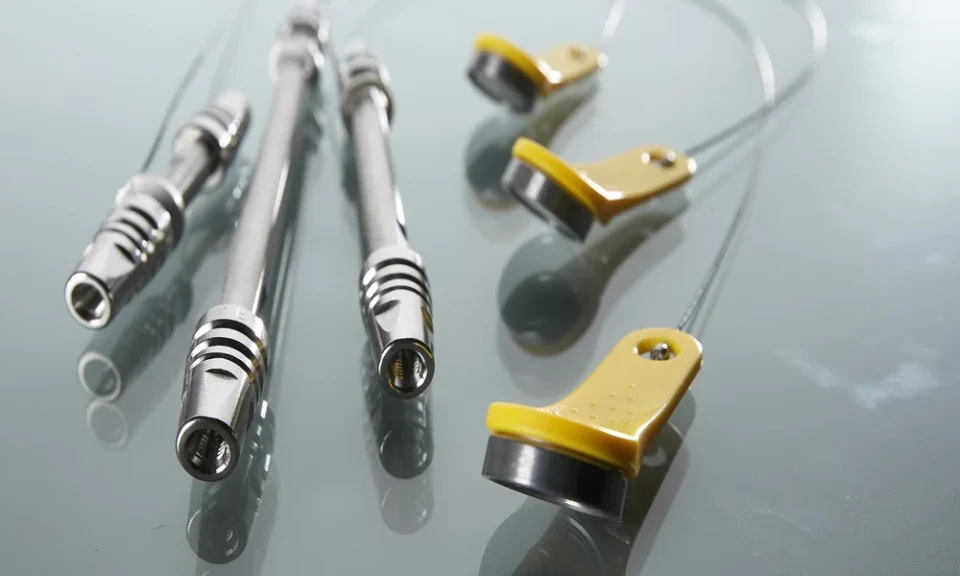
Laboratory separation depends on how well components move through the stationary phase. An HPLC Column with a refined design helps components leave the system as narrow peaks. Researchers want columns that deliver clear separation without excessive run time. Poor design choices often produce broad peaks and overlapping signals. Careful attention to particle size, surface chemistry, and dimensions reduces these problems. Results improve when the column matches the sample and method conditions.
Particle Size Influence
Smaller particles create more surface contact and improve how components separate. This leads to sharper peaks in most standard methods. Flow rates must stay within the pressure limits of the system. Larger particles lower pressure but usually reduce the detail in the chromatogram.
Surface Chemistry Matching
The bonded phase decides how strongly each compound is retained. Matching the phase to the sample polarity produces better spacing between peaks.
- Select non-polar phases for compounds with long carbon chains.
- Use polar phases when the sample contains many hydroxyl groups.
- Check end capping to limit unwanted secondary interactions.
- Confirm carbon load for adequate retention of target compounds.
- Match pore size to the molecular weight of the sample.
- Avoid phases that show strong ion exchange with ionic compounds.
- Test a short method to confirm peak shape before full runs.
- Record the phase type next to each validated method file.
Dimension Selection Practice
Column length and internal diameter control both resolution and analysis time. Longer columns give more separation but increase solvent use and pressure. Narrower diameters improve sensitivity with less sample volume. Real methods often need a balance between these factors.
What Determines Peak Shape Quality
Many factors influence how clean and narrow each peak appears on the detector. Particle uniformity and packing density play major roles in reducing band broadening. Mobile phase composition and temperature also affect the final shape.
Small changes in any of these areas can shift the result from acceptable to poor. Operators who control these variables together see more consistent resolution across batches.
Flow Rate Balance
Correct flow keeps the components moving at the right speed through the bed. Too high a flow reduces contact time and lowers resolution. Too low a flow stretches the run without clear gains. Most methods settle on a middle range that the system can maintain.
Temperature Control Effect
Stable temperature keeps retention times repeatable from one injection to the next. The HPLC Column responds to heat changes by altering how strongly compounds bind. Operators set a fixed value that matches the method’s needs. Sudden shifts create drifting peaks that complicate identification.These points help match the column to the specific needs of each method.
Practical FAQ Points
- How does particle size affect pressure?Smaller particles raise pressure and may exceed system limits.
- What causes peak tailing most often?Secondary interactions or poor packing density are frequent sources.
- Does column diameter change sensitivity?Narrower diameters usually increase signal height for the same mass.
- When should a column be replaced?Replace it when resolution drops, or peak shapes become distorted.
- Can one phase suit all sample types?Most phases work best with a limited range of compound polarities.
- How important is temperature stability?Stable temperature keeps retention times consistent across sequential runs.
Steady Method Results
To succeed when particle size, surface chemistry, and dimensions stay matched to the sample. Regular review of peak shape and resolution numbers shows when adjustment is needed. Consistent operation with fixed conditions produces clearer data over time. Small controlled changes guided by recorded results build reliable methods. Execution of these steps matters more than any single design feature.
