
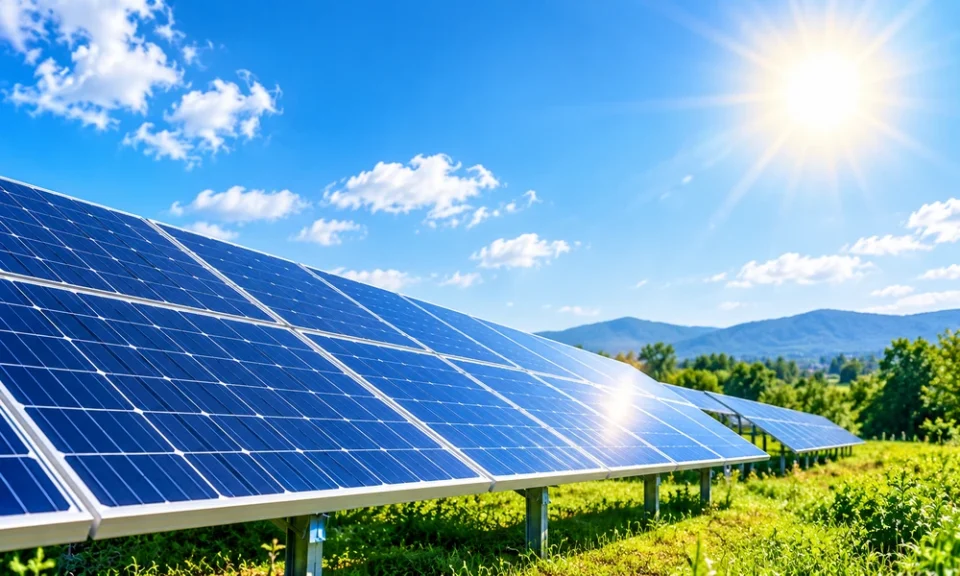
When the electricity grid is unavailable or unreliable, solar power can do more than reduce electricity bills. A properly designed off-grid system can generate electricity during the day, store energy in batteries and supply essential loads when solar production falls.
That independence comes with a different design challenge from a conventional rooftop installation. There is no grid to fill an energy shortfall, so the solar array, inverter and battery have to work together around the property’s actual consumption. The right system is therefore not simply the one with the most panels or the largest battery.
What is an off-grid solar system?
An off grid solar system operates independently of the utility grid. Its core components are solar panels, an off-grid inverter and battery storage.
| Component | Role in the system |
| Solar panels | Generate DC electricity from sunlight |
| Off-grid solar inverter | Converts and manages electricity for household loads |
| Battery | Stores energy for periods when solar generation is unavailable |
| Mounting structure | Secures the panels |
| Wiring and protection | Connect and protect the installation |
| Monitoring | Provides visibility into system performance where supported |
During daylight hours, solar energy can supply connected appliances while charging the battery when generation exceeds the immediate load. After sunset, stored energy becomes the main source of electricity. During cloudy periods, the system has to balance reduced solar generation against available battery capacity.
This is why off-grid systems need to be sized around both energy consumption and backup requirements.
Where does off-grid solar make sense?
Off grid solar systems are particularly useful where a reliable grid connection is unavailable or where frequent interruptions make independent power valuable.
| Situation | Potential advantage |
| Remote home | Can operate without a utility connection |
| Farmhouse or isolated property | Reduces dependence on grid infrastructure |
| Area with frequent outages | Battery storage can support loads during interruptions |
| Unreliable grid | Solar becomes a primary energy source |
| Independent-energy requirement | System can be designed around solar and storage |
An off-grid system can be used for homes as well as other properties, but the appropriate configuration depends on the connected loads. A small home with lights, fans and basic electronics has very different requirements from a property running pumps, refrigerators and air conditioners.
How does the system work through a typical day?
The energy flow changes as sunlight changes.
- During the day: Solar panels generate electricity. The inverter manages the available power, supplying connected loads and directing surplus energy towards battery charging where the system allows it.
- In the evening: Solar production falls and eventually stops. The battery supplies the connected loads.
- During poor solar conditions: The system relies on available battery storage while generation is lower. If the property regularly experiences several low-sunlight days, the system needs to be designed with that pattern in mind.
- When the battery becomes depleted: Unlike a grid-connected system, an off-grid installation cannot simply draw electricity from the utility network. The loads may need to be reduced or the system may require another backup source, depending on its design.
That last point is why battery sizing is as important as panel capacity.
Start with the household load
Before choosing equipment, list the appliances that need to operate and estimate how long they run each day.
| Load | What to assess |
| Lights | Number, wattage and operating hours |
| Fans | Number running simultaneously |
| Refrigerator | Consumption and compressor operation |
| Television/computer | Daily operating time |
| Water pump | Motor rating and operating duration |
| Air conditioner | Electrical consumption and required runtime |
| Other appliances | Power rating and frequency of use |
Two separate calculations are useful.
- Daily energy consumption helps determine how much solar generation is needed over time.
- Peak simultaneous load helps determine the inverter capacity required at any given moment.
These are not the same thing. A home can consume a moderate amount of electricity over a day but still need a relatively capable inverter if several appliances operate together.
PWM or MPPT?
The charging technology matters when matching the solar array to the inverter. PWM, or Pulse Width Modulation, is a simpler charging approach.
MPPT, or Maximum Power Point Tracking, continuously works around the solar array’s maximum power point to make better use of available solar generation as operating conditions change. That does not mean MPPT makes every system automatically better. The correct choice depends on the panel configuration, inverter specifications, battery voltage and system requirements.
Battery sizing is critical
In an off-grid installation, the battery effectively carries solar energy from periods of generation into periods of low or no generation. Battery capacity should be based on the loads that need backup and how long they need to operate.
A homeowner should consider:
- Total backup load
- Required backup hours
- Battery voltage
- Battery chemistry
- Expected charging conditions
- Inverter efficiency
- Required reserve
Oversizing the battery without sufficient solar generation can create another problem: there may not be enough solar energy available to recharge it fully.
Battery and inverter compatibility also needs to be confirmed at the product level. A battery should never be selected simply because its chemistry is popular.
What about lithium-ion?
Lithium-ion storage can offer advantages such as compact construction and different charging characteristics, but “lithium ion inverter” should not be treated as a generic name for every solar inverter that can use a lithium battery. Compatibility is model-specific. It is important to note that while some solar portfolios contain specific hybrid inverter models that support lithium-ion and lead-acid batteries. That does not mean every off-grid inverter in the range is lithium-compatible. For an off grid solar system installation, the battery and inverter should therefore be selected as a compatible pair after checking the manufacturer’s specifications.
Off-grid versus hybrid solar
The two configurations can look similar because both use batteries, but their relationship with the grid is different.
| Requirement | Off-grid | Hybrid |
| Solar panels | Yes | Yes |
| Battery storage | Yes | Yes |
| Utility grid required | No | Yes |
| Can operate independently of grid | Yes | Battery-backed operation |
| Primary purpose | Energy independence | Solar savings + backup |
| Suitable for remote locations | Yes | Mainly where grid connection exists |
If a property has no dependable grid connection, an off-grid system provides the appropriate architecture. If grid electricity is available but outages are a concern, a hybrid system may provide more flexibility.
Monitoring and system management
Energy monitoring becomes particularly useful when the grid is not available as a fallback. Depending on the equipment, monitoring can provide information about solar generation, battery status and system operation. This helps identify whether the property is consistently generating enough energy, whether consumption is unusually high or whether battery storage is being depleted faster than expected. Many off-grid solar solutions include monitoring as part of the broader system architecture, alongside solar panels, off-grid inverters and solar batteries.
What should you check before installation?
A site assessment should precede the final equipment selection.
| Check | Why it matters |
| Daily energy consumption | Determines generation requirement |
| Peak load | Determines inverter capacity |
| Backup duration | Determines battery requirement |
| Roof or land area | Determines panel capacity |
| Shading | Affects solar generation |
| Panel-inverter compatibility | Keeps electrical parameters within limits |
| Battery-inverter compatibility | Essential for correct charging and operation |
| Future electricity demand | Prevents premature undersizing |
| Installation and protection | Supports safe, reliable operation |
A complete quotation should identify the panel models, inverter, batteries, mounting, protection equipment and installation scope. It should also explain what loads the system is designed to support.
For homeowners considering an off grid solar system, established solar providers can be useful when they offer the main components required for the architecture. The current Luminous portfolio, for example, includes off-grid solar inverters, solar panels, batteries and monitoring, with different inverter families and battery configurations for different load requirements.
The important part is not choosing the largest component in each category. An independent solar installation works when generation, conversion, storage and consumption are sized together. Once the household’s real load and backup needs are understood, the appropriate panel capacity, solar inverter for home and battery configuration become much easier to determine.
