
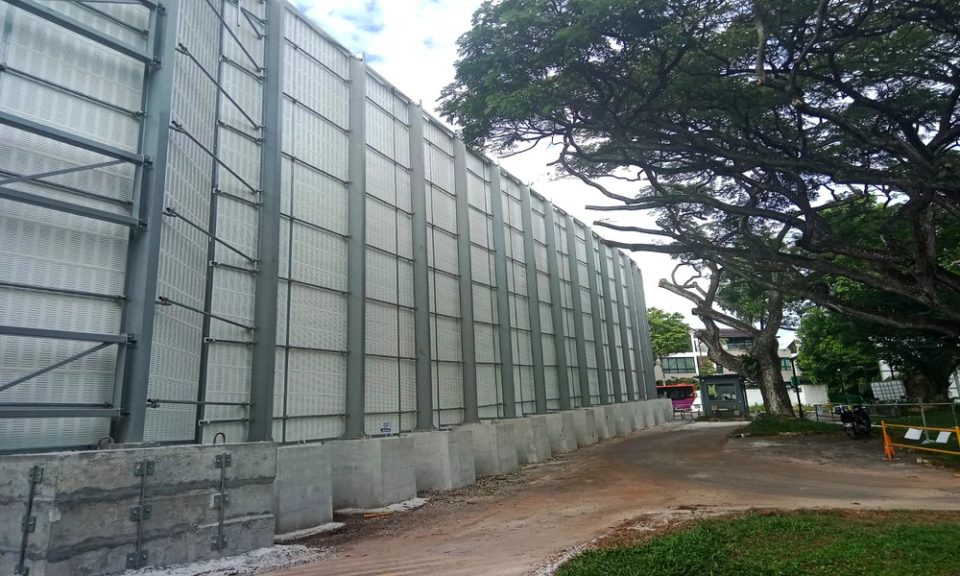
If you’ve ever walked past a construction site in Singapore, you’ll probably notice something right away-it’s busy, active, and often happening right next to where people live, work, or commute.
That creates a constant balancing act.
Contractors aren’t just trying to complete projects on time. They’re also working within strict expectations around noise, especially in dense urban areas where even moderate construction activity can feel disruptive.
So the real challenge isn’t just reducing noise, but keeping work moving while staying within limits.
That’s where a sound barrier in Singapore becomes part of a much bigger system.
Work doesn’t stop, but it gets carefully structured.
Construction timelines are tight, and delays can affect everything from budgets to coordination with other teams.
But in Singapore, noisy work can’t just happen anytime.
Contractors often need to:
- Schedule louder activities within approved hours
- Avoid stacking multiple high-noise tasks at once
- Break large operations into smaller, more manageable phases
This changes how work is planned.
Instead of doing everything as quickly as possible, teams focus on doing it in a way that keeps noise levels controlled throughout the day.
Noise control starts before work begins.
One thing that stands out in urban projects is how early noise planning begins.
Before machinery even arrives on-site, teams usually look at:
- Which activities will produce the most noise
- Which areas of the site are closest to sensitive surroundings
- How sound is likely to travel within the space
From there, they plan where a sound barrier setup will have the most impact.
This makes the system more intentional. It’s not just about enclosing the site-it’s about placing barriers where they actually make a difference.
Barriers are only one part of the solution.
It’s easy to assume that once barriers are installed, noise is “handled.”
But in reality, barriers are just one layer.
Contractors also rely on:
- Adjusting work schedules
- Positioning equipment more strategically
- Using temporary enclosures for louder activities
- Sequencing tasks to avoid noise spikes
A sound barrier system works best when it’s combined with these operational decisions.
On its own, it helps. But together, the impact is much more consistent.
Site layout plays a bigger role than expected.
Urban construction sites are often tight and surrounded by existing buildings.
That means:
- There’s limited space to spread out equipment
- Noise reflects off nearby structures
- Work zones are closer to site boundaries
Because of this, layout becomes part of noise control.
Contractors might:
- Place louder equipment further inside the site
- Use storage areas as buffer zones
- Align barriers with the most exposed sides
These small adjustments help reduce how much noise reaches the outside environment.
Monitoring keeps everything in check.
Noise control is something that’s tracked continuously.
On most sites, contractors regularly:
- Measure noise levels at boundary points
- Monitor during peak activity periods
- Adjust operations if levels approach limits
This creates a feedback loop.
- Pause certain activities
- Add temporary reinforcement
- Shift work to a different time or area
So compliance becomes part of daily site management.
High-noise activities are handled differently.
Some types of work naturally produce more noise than others.
Activities like:
- Piling
- Demolition
- Heavy drilling
are usually treated with extra care.
- Reinforce barrier sections near active zones
- Add localised enclosures around equipment
- Tighten scheduling to stay within allowed limits
This helps keep even high-impact work under control without stopping progress entirely.
Flexibility is what keeps projects moving.
One of the biggest realities of construction is that things change.
Work zones shift, timelines adjust, and new challenges come up along the way.
So noise control systems need to be flexible too.
Instead of staying fixed, a sound barrier setup is often:
- Repositioned as work areas move
- Reinforced during louder phases
- Reduced when noise levels drop
This adaptability is what allows contractors to keep working efficiently while still managing noise expectations.
It’s not just about rules-it’s about practical effects.
While regulations play a big role, there’s also a practical side to all of this.
Construction sites in Singapore are often close to:
- Homes
- Offices
- Schools
- Public walkways
So managing noise isn’t just about avoiding penalties-it’s about reducing disruption to everyday life.
When noise is handled properly:
- Fewer complaints arise
- Work can continue without interruption
- Projects stay on track
So the effort put into balancing work and restrictions actually supports smoother operations overall.
Final Thoughts
Urban construction in Singapore is all about balance.
Contractors need to keep projects moving while working within strict noise expectations and limited space.
A sound barrier system plays an important role, but it’s only one part of a bigger picture that includes:
- Careful planning
- Smart scheduling
- Ongoing monitoring
- Flexible adjustments
In practice, it’s not about eliminating noise completely, but managing it in a way that allows construction and city life to exist side by side.
