
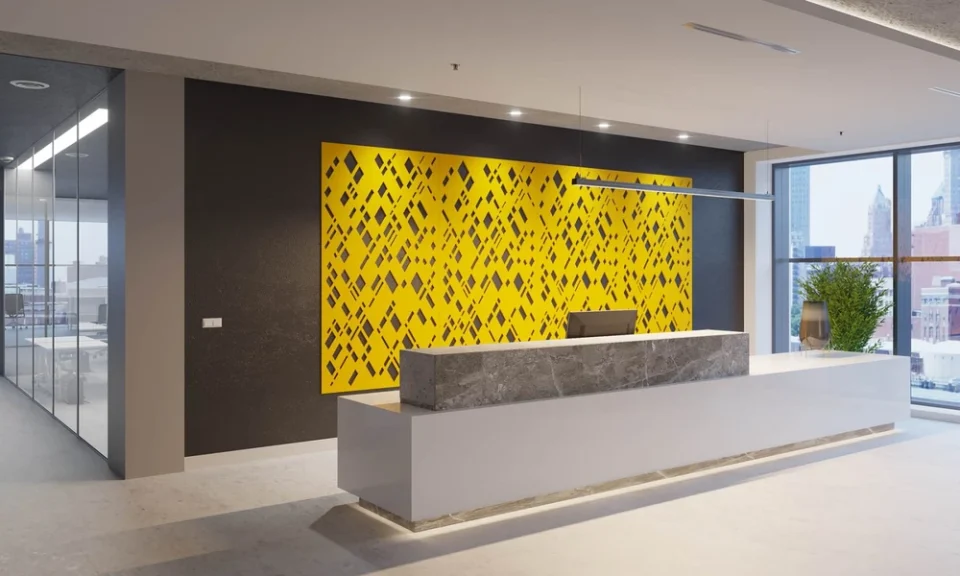
Walk into a well-designed office, hotel, or restaurant, and the sound just feels right. Conversations are easy to follow, and the space doesn’t feel overwhelming even when it’s busy. That kind of balance rarely happens by accident. In many cases, acoustical wall panels are doing the heavy lifting behind the scenes.
What’s interesting is that the installation process is usually straightforward, but it does require planning. It’s not just about fixing acoustical panels to a wall, but about placing them where they’ll actually make a difference.
Understanding the space before installation.
Before anything gets installed, the space needs to be assessed. Every commercial environment behaves differently when it comes to sound. An open-plan office will have different challenges compared to a restaurant or a meeting room.
Installers typically look at things like:
- The size of the room
- The height of the ceilings
- The materials already in place (glass, concrete, wood)
- Where noise tends to build up
In many cases, the goal is to identify reflective surfaces where sound bounces the most. These are usually the best locations for panels.
Rather than covering every wall, it’s more effective to treat specific areas strategically.
Choosing the right type of panel.
Not all acoustical panels are the same. The choice depends on both performance and design requirements.
Common types include:
- Polyester fibre panels, often used in offices and meeting rooms
- Perforated wood panels, popular in hospitality and premium interiors
- Foam-based panels, typically used in studios or specialised environments
- Decorative panels that double as design features
Each type has its own installation method, but most are designed to be mounted directly onto walls or onto a framing system.
Preparing the wall surface.
Once the layout is confirmed, the wall needs to be prepared. This step is often overlooked, but it makes a big difference in how clean the final result looks.
Installers usually:
- Clean the wall surface to remove dust or grease
- Mark out panel positions using measurements or templates
- Check for level alignment to ensure panels sit evenly
In some cases, especially for uneven walls, a timber or metal batten system is installed first. This creates a flat surface for the panels to attach to.
Installation methods used in commercial spaces.
There are a few common ways acoustical wall panels are installed, and the method depends on the panel type and the wall structure.
1. Adhesive mounting
This is one of the simplest methods. Strong construction adhesives are used to fix panels directly onto the wall. It works well for lighter panels and smooth surfaces.
2. Mechanical fixing
Panels are secured using screws, brackets, or clips. This is more common for heavier panels or areas where long-term durability is important.
3. Z-clips or impaling clips
These allow panels to be mounted securely while still being removable. This is useful in commercial spaces where maintenance or future adjustments may be needed.
4. Framed systems
Some installations use a track or frame system, especially for larger feature walls. Panels are fitted into the structure, creating a more integrated look.
Each method is chosen based on safety, wall condition, and how permanent the installation needs to be.
Aligning panels for both function and design.
Installation isn’t just technical. It’s also visual.
Panels are often arranged in patterns or grids to match the overall design of the space. In some cases, they’re used to create feature walls. In others, they’re spaced out evenly for a more subtle look.
At the same time, placement still needs to support acoustic performance. Panels are typically installed at ear level or along walls where sound reflections are strongest.
Balancing these two factors is what makes a good installation stand out.
Final checks and adjustments.
Once all panels are in place, the final step is checking everything.
Installers will:
- Ensure panels are aligned properly
- Check that fixings are secure
- Clean up any marks or residue
- Make small adjustments if needed
In some cases, the acoustic performance is also reviewed after installation, especially in larger commercial projects.
Why proper installation matters.
Acoustical panels only work well when they’re installed correctly. Poor placement or uneven spacing can reduce their effectiveness, even if the panels themselves are high quality.
A well-installed system helps manage sound reflections, making speech clearer and reducing the sense of acoustic clutter in a space. Over time, this improves how people experience the environment, whether they’re working, dining, or simply spending time there.
Final Thoughts
Installing acoustical wall panels in commercial spaces isn’t overly complicated, but it does require careful planning and attention to detail. From assessing the space to choosing the right mounting method, each step plays a role in the final result.
When done properly, the panels blend into the design while improving how the space feels day to day. It’s one of those upgrades that people may not immediately notice, but they’ll definitely feel the difference once it’s in place.
